
As temperatures rise and outdoor activity increases, many people reach for electrolyte drinks to support hydration. From athletes and hikers to gardeners and weekend warriors, electrolyte beverages have become increasingly popular. But with dozens of products on the market, how do they actually compare?
In this blog, we'll examine several popular hydration products based on three practical criteria:
Electrolyte content
Cost per serving
Third-party testing and quality assurance
Do Most People Need Electrolytes?
For most healthy adults engaging in less than 60–90 minutes of moderate activity, water is typically sufficient for hydration. Electrolyte replacement becomes more relevant during prolonged exercise, heavy sweating, hot environments, illness involving vomiting or diarrhea, or for individuals with specific medical conditions that increase electrolyte losses. ConsumerLab (www.consumerlab.com) notes that electrolyte supplements are generally most useful during strenuous exercise lasting longer than 90 minutes or when substantial sweat losses occur.
The primary electrolyte lost through sweat is sodium, although potassium and smaller amounts of magnesium are also lost. Sodium losses in sweat vary considerably between individuals, ranging from approximately 500–1,500 mg per liter of sweat.
Sports Drinks vs. Electrolyte Supplements
Many consumers assume all hydration products are similar, but they are designed for different purposes.
Gatorade: hydration and carbohydrate fuel during exercise
Powerade: hydration and carbohydrate fuel during exercise
Gatorade Endurance: endurance exercise with higher sweat losses
Nuun: hydration/light exercise
Liquid IV: enhanced hydration with moderate sodium and some carbohydrates
DripDrop: oral rehydration with a small amount of carbohydrates
Pedialyte: medical- style rehydration
LMNT: high sodium replacement
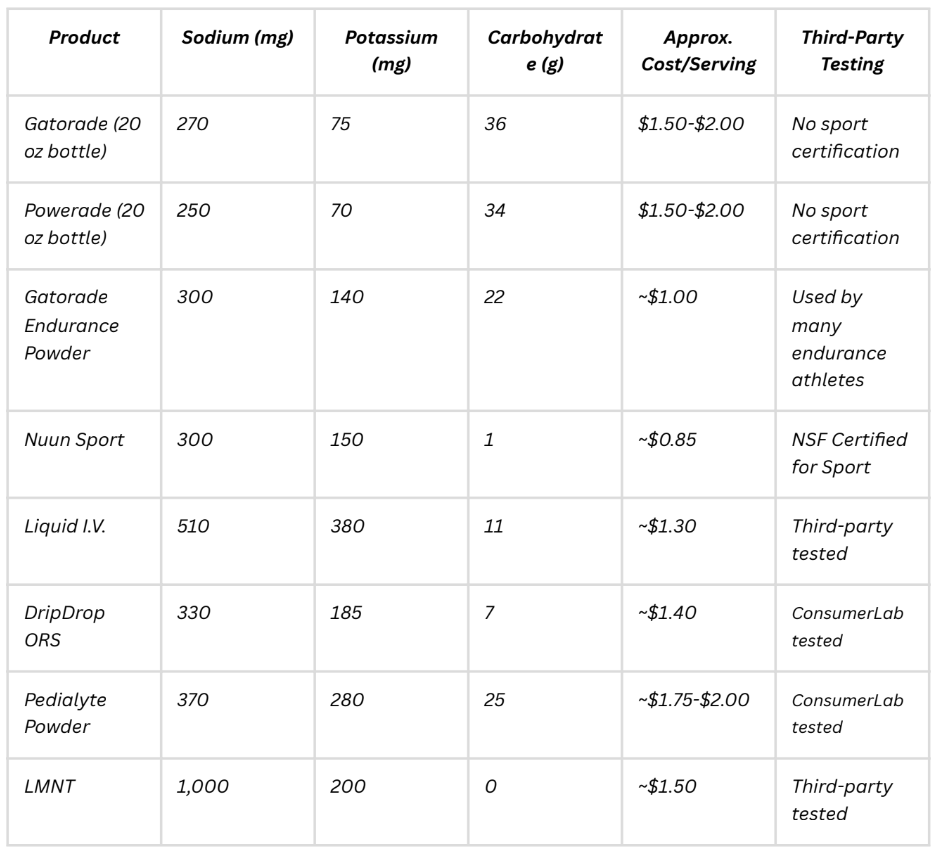
Prices are approximate retail prices and may vary by retailer and package size.
Best Value: Nuun Sport
At about $0.85 per serving, Nuun Sport offers one of the lowest costs among commercial electrolyte products while still providing meaningful amounts of sodium, potassium, and magnesium. For individuals exercising moderately in the summer heat, this may provide an effective balance between cost and electrolyte replacement.
Best for Heavy Sweaters: LMNT
LMNT offers one of the highest sodium contents among commercial electrolyte mixes, at 1,000 mg per packet. This can be beneficial for endurance athletes, workers in hot environments, or individuals identified as "salty sweaters." However, the high sodium content may be excessive for many recreational exercisers.
Best for Oral Rehydration: Pedialyte and DripDrop
When dehydration occurs due to illness, vomiting, diarrhea, or significant fluid losses, products formulated as oral rehydration solutions (ORS) may be more appropriate than sports drinks. ConsumerLab identified certain ORS products as having sodium and potassium concentrations that are more consistent with oral rehydration recommendations.
Best for Everyday Hydration: Liquid I.V.
Liquid I.V. occupies a middle ground between traditional sports drinks and high-sodium endurance products. With moderate sodium and relatively high potassium content, it may be useful for travel, hot weather, and moderate activity. The inclusion of carbohydrates may also enhance fluid absorption during periods of increased fluid loss.
What About DIY Electrolyte Drinks?
A homemade electrolyte beverage can cost a fraction of the price of commercial products. Many endurance athletes create their own mixtures using sodium and potassium salts, along with flavoring. Online communities frequently cite cost savings as a major reason for switching to homemade options.
A simple homemade option may include:
16–24 oz water
1/4 teaspoon salt
Lemon or lime juice
Small amount of sugar or honey (optional)
The primary advantage is cost. The primary disadvantage is the lack of standardized formulation and third-party quality testing.
How Important Is Third-Party Testing?
Third-party testing can provide reassurance that a product contains what the label claims and is free from certain contaminants. Athletes competing under anti-doping regulations may specifically seek certifications such as NSF Certified for Sport or Informed Sport.
For the average consumer, third-party testing is not necessarily required, but it can serve as an additional quality indicator when comparing products.
A Helpful RD Perspective
One of the biggest misconceptions is that higher electrolyte content automatically means a better product. In reality, the best choice depends on the situation:
A recreational walker spending 30 minutes outdoors may only need water.
Someone mowing the lawn in Montana heat for several hours may benefit from a moderate electrolyte drink like Gatorade, Nuun, or Liquid I.V.
A marathon runner or cyclist who loses large amounts of sweat may benefit from higher-sodium products such as LMNT or Gatorade Endurance.
Someone recovering from vomiting or diarrhea may be better served by an oral rehydration solution like Pedialyte or DripDrop.
Most importantly, remember that electrolyte supplements are tools, not necessities. For many people, adequate fluid intake and a balanced diet provide the electrolytes needed for everyday health and hydration.

Written by Kaitlyn Schlangen, MS, RD
Kaitlyn specializes in: Eating disorders, disordered eating patterns, gastrointestinal (GI) disorders and diseases, and sports nutrition. She is dedicated to supporting individuals across all spectrums of these challenges.